
This post may contain affiliate links. I only recommend products I use and love. Read the full disclosure here
Updated on: September 28, 2026
Originally published on: September 28, 2026
When your coffee maker and cutting board already share the same patch of counter, every appliance needs to earn its place. Choosing an air fryer for a small kitchen means finding one that makes cooking easier without turning your limited counter space into a crowded workspace.
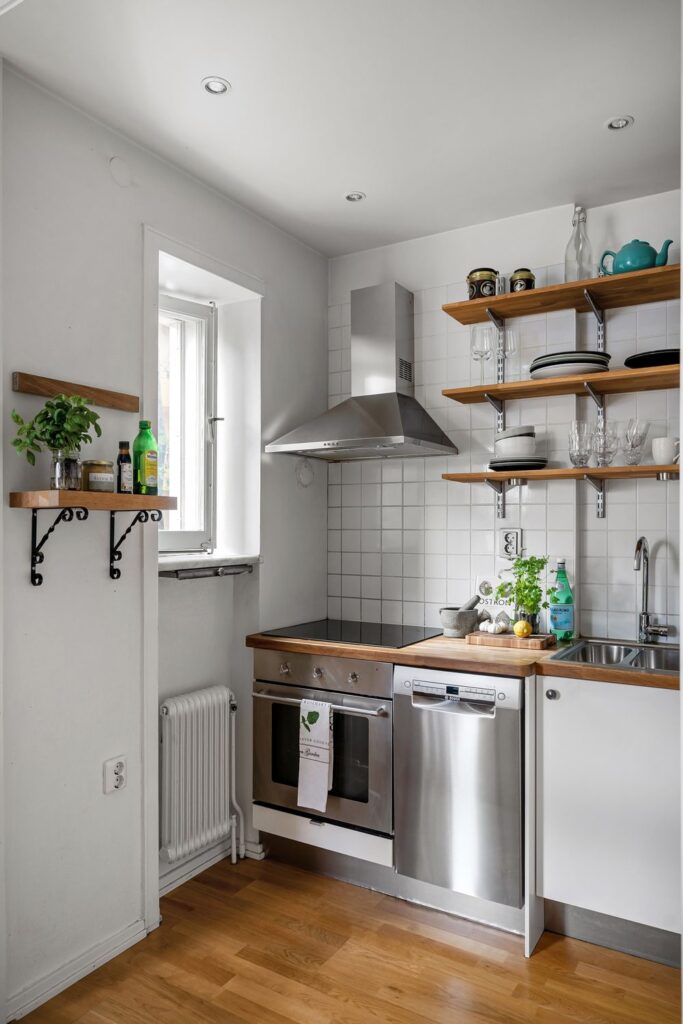
Choosing the right air fryer for a small kitchen is less about finding the smallest model. The best choice depends on how much food you cook, where the appliance will sit, and which features actually make your routine easier.
Here are the key factors to consider before buying.
Measure Your Counter Space First
The first step is simple: measure where the air fryer will live.
Check:
- Available width and depth
- Height clearance under cabinets
- Space needed to open the basket or door
- Distance from other heat-sensitive items
A common mistake is measuring only the appliance footprint. You also need room to safely remove hot food and place the basket somewhere stable.
Before buying, mark the approximate dimensions on your counter with tape. Then imagine using it during a normal dinner:
- Can you still prepare food nearby?
- Can you open the basket without hitting another appliance?
- Is the outlet close enough without stretching the cord across your workspace?
An air fryer that technically fits may still feel inconvenient if it interrupts your daily kitchen flow.
Match the Basket to Your Everyday Meals
Air fryer size is usually measured in quarts, but capacity alone does not tell the whole story.
The shape of the cooking area matters just as much.
A deeper basket can be useful for taller foods, while a wider surface gives you more room to spread food into a single layer. Single-layer cooking is especially important for foods that need airflow around the surface, such as fries, chicken wings, and vegetables.
Before comparing sizes, think about your most common meals:
- Are you cooking for one or two people?
- Do you usually prepare sides or full meals?
- Do you want to cook larger items like chicken?
- Do you prefer batch cooking?
For example, a smaller household may prefer a compact model that handles quick dinners and snacks. A family may benefit from a larger basket that reduces the need for multiple cooking rounds.
Do not choose based only on the largest meal you make once a year. Choose based on what fits your normal week.
Look for Cooking Functions You Will Actually Use
Many air fryers advertise a long list of cooking modes, but more options do not always mean better value.
Start with the foods you actually prepare.
Useful functions may include:
- Air frying
- Roasting
- Baking
- Reheating
- Dehydrating
- Broiling
A versatile appliance can replace several smaller kitchen tools, but only if you regularly use those functions.
Ask yourself:
- Will I actually bake in this?
- Will I use it instead of my oven?
- Does it simplify meals I already cook?
A simple appliance with easy-to-use functions is often more useful than one with dozens of settings you rarely touch.
Consider Temperature Control and Cooking Precision
One of the biggest differences between basic and advanced air fryers is how they help you judge when food is done.
Timers are useful, but they do not always account for differences in food size, starting temperature, or thickness. A chicken breast that is slightly larger than average may need more time, while a smaller piece may dry out if cooked for the same duration.
For foods where doneness matters, temperature-based cooking can provide more confidence. Some air fryers now include built-in temperature monitoring that tracks the food itself rather than relying only on a countdown timer. Using a food thermometer to check internal temperature can also help ensure foods are cooked safely.
For example, a smart countertop air fryer with built-in temperature monitoring can help home cooks better understand when food reaches the desired result.
When comparing models, consider whether smart features solve a problem you actually experience. The best technology should reduce guesswork, not add complexity.
Think About Cleanup Before Buying
A convenient appliance should also be easy to maintain.
Before choosing an air fryer, check:
- Which parts are dishwasher-safe
- How easily the basket can be removed
- Whether grease collects in difficult areas
- How much storage space accessories require
Cleanup affects how often you use the appliance. A model that feels annoying to wash may eventually stay unused on the counter.
Also consider where you will store accessories. A large appliance with multiple trays and racks needs additional cabinet space.

Check Controls and Everyday Usability
An air fryer should be simple to operate when you are preparing dinner.
Look for:
- Clear displays
- Easy temperature adjustments
- Simple timer controls
- Presets that match your cooking habits
A feature list may look impressive, but usability matters more.
Imagine using the appliance while:
- Preparing multiple dishes
- Helping children
- Cooking after a long workday
The best controls are the ones you can understand quickly without stopping what you are doing.
Consider Noise, Heat, and Kitchen Placement
Small kitchens often have less separation between cooking areas and living spaces.
Before buying, consider:
Noise
Some air fryers are noticeably louder than others. If your kitchen connects directly to a living room or dining area, noise level may matter more.
Heat
Air fryers release hot air during operation. Make sure there is enough space around the appliance and avoid placing it directly under cabinets or near heat-sensitive surfaces. It is also important to keep flammable items away from hot cooking surfaces, including kitchen towels and potholders.
Daily placement
An appliance you use every day should have a convenient home. If it is too difficult to move in and out of storage, you may use it less often.
Choose Features That Earn Their Space
A good air fryer should fit your kitchen, your meals, and your lifestyle.
Before buying, make a short list:
- How much counter space do I have?
- How many people do I usually cook for?
- What foods will I make most often?
- Which features solve real problems for me?
- Will I use this appliance often enough to justify the space?
The right air fryer is not always the largest or the most advanced model. It is the one that makes your everyday cooking easier.
Final Thoughts
Choosing an air fryer for a small kitchen comes down to balance.
Focus on:
- A size that fits your counter and cooking habits
- A capacity that matches your household
- Functions you will actually use
- Controls that make cooking simple
- Features that improve your daily routine
A well-chosen air fryer should not compete with your kitchen space. It should make that space work better.