
This post may contain affiliate links. I only recommend products I use and love. Read the full disclosure here
Updated on: July 24, 2026
Originally published on: July 24, 2026
Choosing a dining table sounds simple until you start figuring out how to choose a dining table that truly fits your home and lifestyle. It’s easy to fall in love with a beautiful table online, but once you picture people pulling out chairs, carrying plates through the room, or gathering for meals, the decision becomes much more complicated.
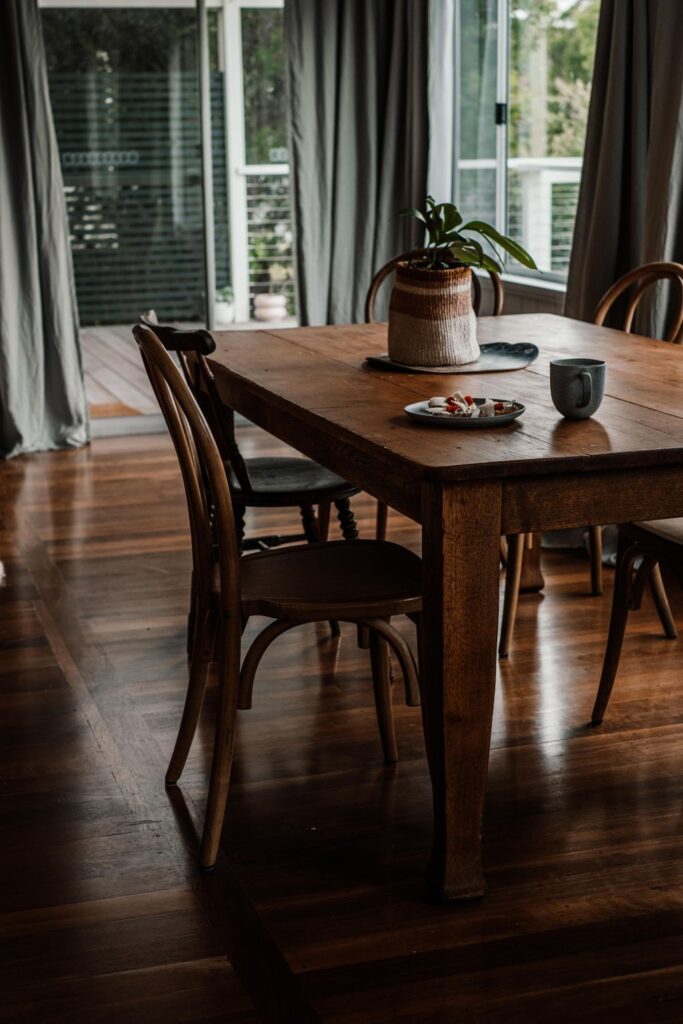
The best dining table isn’t just one that looks great. It should fit your space, suit your lifestyle, and feel comfortable to use every day.
Start with the Room, Not the Furniture
Before you start shopping, take a close look at how your dining area is used. Think about walkways, nearby doors, storage, and how people naturally move through the space during meals. These details will help you choose a table that fits comfortably instead of one that simply looks good in photos.
Leave Enough Space Around the Chairs
A dining table may look perfect in a showroom, but it still feels cramped once it’s in your home if there isn’t enough room to move around it.
Aim for about 36 inches of clearance behind the chairs whenever possible. Most designers recommend leaving enough clearance around a dining table so people can comfortably pull out chairs and move through the room.
This gives everyone enough space to pull out a chair, sit down comfortably, and walk behind someone without squeezing through a tight gap.
The space around the table often has just as much impact on comfort as the table itself.
Shape Is More Than a Style Choice
The shape of your table affects both the look and function of your dining space.
Round tables work well in smaller rooms because they soften tight corners and encourage conversation. Rectangular tables are often the best choice for longer rooms, while square tables can work well in compact spaces but may feel crowded when seating four people.
Oval tables offer a nice balance by providing extra seating while keeping softer edges than a traditional rectangle.
Don’t Forget to Measure the Chairs
Many people measure the table but forget about the chairs.
Wide armrests, deep seats, and angled chair backs can take up much more space than expected. In a smaller dining area, simple armless chairs often create a more open, comfortable feel.
If you’re considering a bench, think about how often people will need to slide in and out. While benches can save space, they aren’t always the most convenient for everyday use.
Think About How You Really Use Your Dining Room
It’s easy to shop for the version of your life you wish you had instead of the one you actually live.
Maybe you imagine hosting elegant dinner parties every weekend. In reality, your dining table may spend more time holding laptops, homework, groceries, or yesterday’s mail.
Choose a table that works for your everyday routine first.
Daily Life Should Guide Your Decision
If only two people eat at the table most days, you probably don’t need to choose your furniture around the one holiday meal that happens once or twice a year.
A four-person table can feel spacious in the right room, while a six-person table may make the space feel crowded if the chairs are oversized or the room serves multiple purposes.
Think About Where the Extension Leaves Will Go
Extendable tables are a great option if you occasionally host family gatherings or holiday meals.
Before buying one, make sure you have somewhere convenient to store the extension leaves when they’re not being used. A closet, under-bed storage, or another easy-to-access location can make a big difference.
An extendable table gives you flexibility without taking up extra space every day.
Choose a Surface That Fits Your Lifestyle
The material you choose matters just as much as the size. It’s also worth looking for signs of well-made furniture before investing in a dining table you’ll use every day.
Wood offers warmth and timeless style but requires occasional care. Glass can make a room feel larger but usually needs frequent cleaning to remove fingerprints. Stone or stone-look surfaces are durable and attractive, although they’re often much heavier than people expect.
Choose a material that works well with your family’s daily habits instead of one that’s simply trendy.
Choose a Style You’ll Love for Years
Trends come and go, but a dining table usually stays in your home for a long time.
Rather than chasing the latest style, look for something that complements your home’s overall feel and will still look good years from now.
Match the Overall Style, Not Every Detail
Your dining table doesn’t have to match every other piece of furniture exactly.
Instead, focus on creating a room that feels balanced. If your existing furniture is large and heavy, a lighter dining table can help open up the space. If everything else feels delicate, a more substantial table can add visual balance.
A coordinated look feels much more natural than trying to match every finish perfectly.
Pay Attention to the Table Base
The base can affect comfort more than many people realize.
Pedestal tables give everyone a little more legroom, especially around round or oval tables. Traditional four-leg designs are sturdy and familiar but can sometimes interfere with chair placement.
Picture people actually sitting around the table before making your decision.
Buy for the Next Few Years, Not Forever
Few pieces of furniture stay with us forever.
Families grow, children get older, people move, and dining rooms often become homework stations, home offices, or gathering places for different occasions.
Choose a table that’s built to last but flexible enough to adapt as your lifestyle changes.
If you’re comparing options online, don’t focus only on the product photos. Think about how the table will fit into your everyday routine, including family meals, work projects, backpacks, groceries, and everything else that ends up on the dining room table.
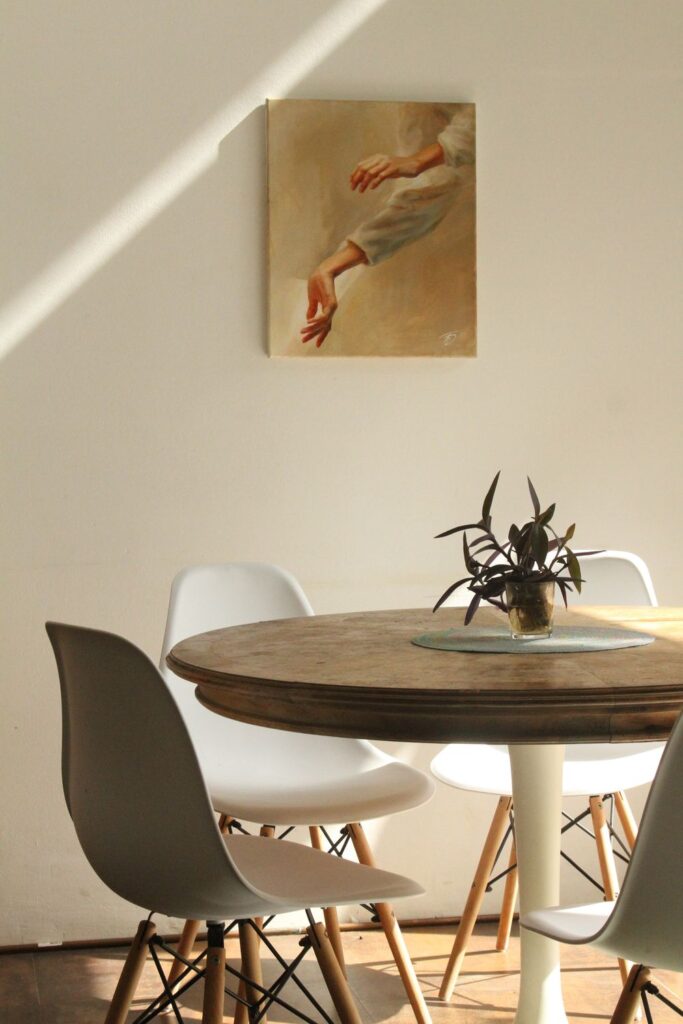
Don’t Overlook the Small Details
The finish, edge profile, height, and chair pairing may seem like small details, but they’re the things you’ll notice every single day.
Edge Design Makes a Difference
A sharp edge may look modern, but it isn’t always the most comfortable during long meals or family gatherings.
Rounded edges often feel softer and are especially practical in homes with young children or tight walkways.
Small design details can make a surprisingly big difference in everyday comfort.
Make Sure the Height Feels Comfortable
Most dining tables are built to a standard height, but thick tabletops, chair cushions, and armrests can change how comfortable they feel.
Whenever possible, sit at a similar setup before buying. You’ll know much faster whether it feels comfortable than by reading measurements alone.
Lighting Changes Everything
The finish you love in a showroom may look completely different in your home.
Natural daylight, evening lighting, and nearby wall colors all affect how wood tones and painted finishes appear.
Whenever possible, view finished samples in your own home before making your final decision.
What Matters Most Before You Buy
Before you focus on style, make sure the table actually fits your space.
Check that people can move comfortably around it, chairs slide in and out easily, and there’s enough room for everyday life.
Next, consider how well the chairs work with the table. Even a beautiful tabletop can become frustrating if the seating isn’t comfortable or practical.
Finally, think honestly about your lifestyle. Your dining table will likely see everything from family dinners to homework, work projects, and everyday clutter. The best choice isn’t necessarily the fanciest one. It’s the one that fits your home, your family, and the way you actually live.