
This post may contain affiliate links. I only recommend products I use and love. Read the full disclosure here
Updated on: July 7, 2026
Originally published on: July 7, 2026
Choosing a double bed for your child’s bedroom can feel like a big decision. At some point, many kids who have happily slept in a twin bed for years start asking for something larger. Maybe their friends have double beds, they’ve hit a growth spurt, or they simply want a bedroom that feels a little more grown-up.
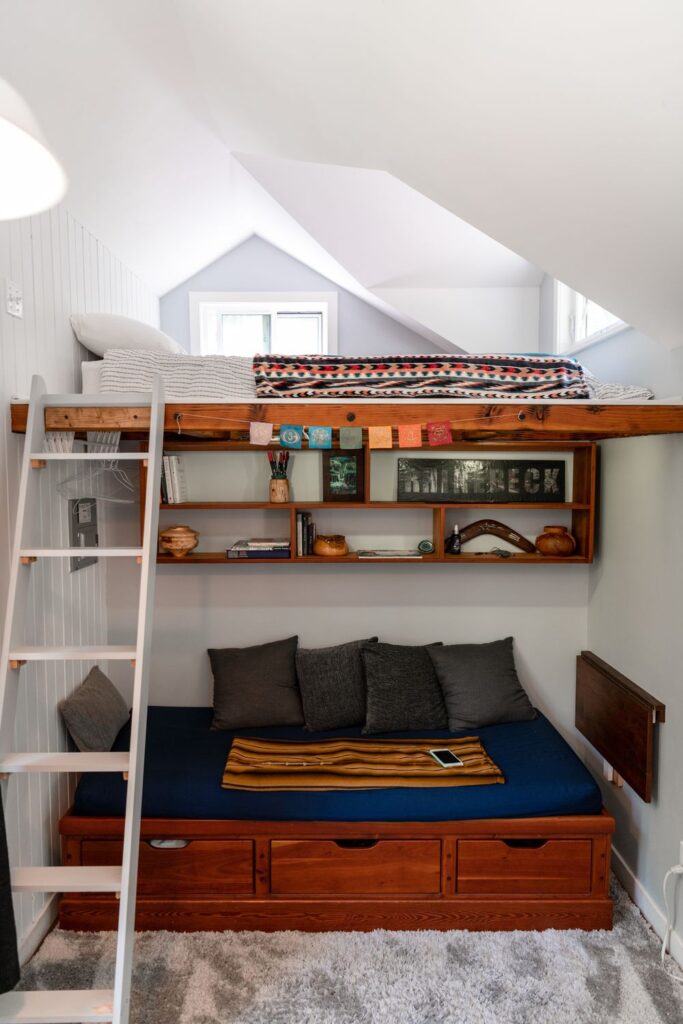
Many parents immediately assume there isn’t enough space. In some cases, that’s true. But more often than you might think, a double bed can fit comfortably in a smaller room with some careful planning. The key is to rely on measurements rather than assumptions before making a decision.
For many families, the biggest question isn’t whether a child wants a larger bed. It’s whether making the jump from a twin to one of the many double mattresses for a standard double bedroom actually makes sense for the space you have. The good news is that with the right layout and a little planning, moving up to a double bed is often much more practical than parents expect.
Why Older Children Want More Space
A child’s request for a larger bed isn’t always about keeping up with friends. As children grow, their sleeping needs change as well. A bed that felt spacious at age seven can start feeling cramped a few years later.
Taller children and teenagers naturally need more room to stretch out, roll over, and sleep comfortably through the night. When a bed starts to feel too small, sleep quality can suffer. Understanding how much sleep children need at different ages also highlights why a comfortable sleep environment becomes even more important as they grow.
Instead of dismissing the idea right away, it’s usually worth considering whether the room can realistically accommodate a larger bed.
Measure Before Making a Decision
Before shopping for furniture or ruling out the idea completely, take accurate measurements of the room.
Remember that you need space for more than just the bed itself. You’ll also need room to walk comfortably, open doors, access closets and dressers, and move around the room without constantly bumping into furniture.
One of the easiest tricks is to outline the bed’s dimensions on the floor with painter’s tape. Seeing the actual footprint usually tells you much more than trying to picture it in your head, and it can quickly show whether the room will still feel comfortable.
Sometimes you’ll discover that a double bed fits surprisingly well. Other times, you’ll quickly realize that it would make the room feel cramped. Either way, measuring first eliminates the guesswork.
Choosing the Right Double Bed for the Room
Not every double bed takes up space in the same way, so choosing the right style can make a surprisingly big difference.
If the room is on the smaller side, a small double may provide the extra sleeping space your child wants without making the room feel crowded. Looking at options for fitting a double mattress to a smaller bedroom can also give you ideas for choosing the right mattress and bed frame for your space.
Storage beds are another great option because built-in drawers can replace an extra dresser or storage bins. You can also make the room feel more open by choosing a simple bed frame with visible legs instead of a bulky platform design.
The goal isn’t to squeeze the biggest bed possible into the room. It’s to find the right balance between comfort, storage, and having enough open space to enjoy the room.
Understanding the Trade-Offs
Adding a larger bed to a smaller room almost always requires some compromises.
You may need to replace a larger dresser with a narrower version, relocate a desk, or use wall-mounted shelving instead of floor-standing furniture. In some cases, under-bed storage can help offset the loss of floor space.
For some children, these trade-offs are well worth it because a larger bed dramatically improves comfort. For others, preserving space for hobbies, studying, gaming, or relaxing may be more important.
The best choice depends on how your child actually uses the room daily.
Use Layout to Your Advantage
Furniture placement can make a huge difference in how spacious a room feels.
Positioning a double bed against two walls or into a corner often frees up more usable floor space than placing it in the center of the room. While this arrangement may make one side of the bed slightly less accessible, it can create a more open and functional layout overall.
Keeping pathways clear between the door, windows, and major furniture pieces helps prevent the room from feeling crowded.
Wall-mounted shelves, floating desks, and under-bed storage containers can also help maximize available space while keeping the room organized. These types of small bedroom design ideas can make a compact room feel larger and more functional without sacrificing comfort.
In many cases, thoughtful layout planning is what makes a double bed work successfully in a smaller bedroom.
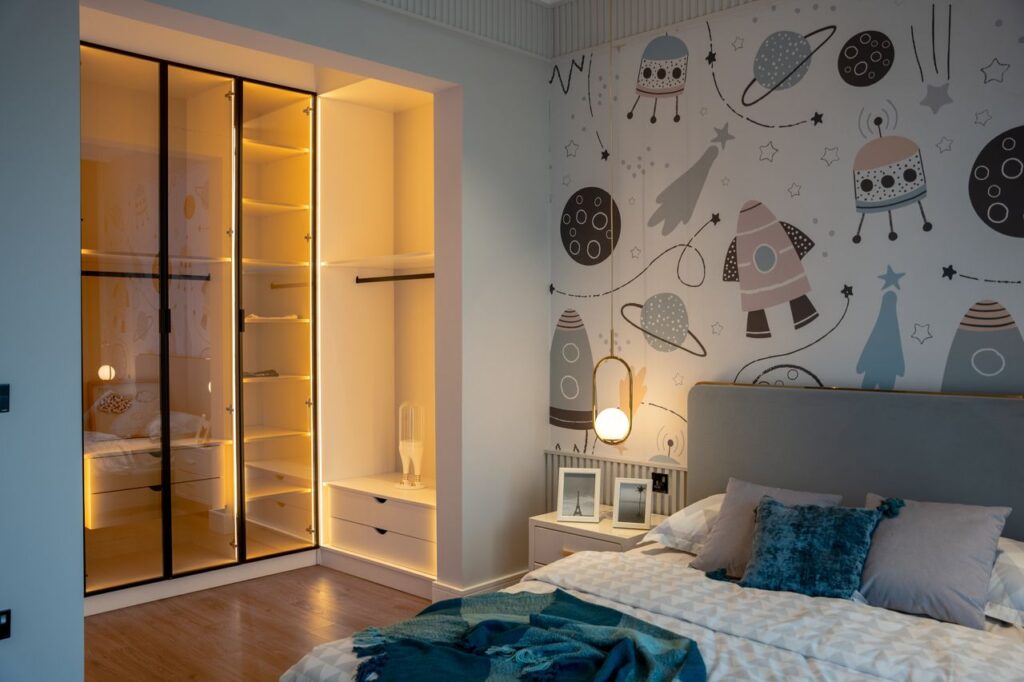
When a Double Bed Isn’t the Right Choice
Sometimes the answer is simply no, and that’s perfectly okay.
If adding a double bed means blocking a closet, making it difficult to access furniture, or leaving little room to move around, the larger bed may create more problems than it solves.
Don’t forget that sometimes a double bed isn’t even necessary. It may simply be that your child needs a more supportive mattress that’s suitable for growing teens.
After all, children’s bodies are constantly changing, and it’s easy to mistake the need for a bigger bed when what they really need is a more supportive sleep surface through puberty and beyond.
A small bedroom should still function as a comfortable living space. If the room becomes overcrowded, the benefits of a larger bed can quickly disappear.
In those situations, a well-designed twin bed with built-in storage or a more mature style may be the better option until circumstances change.
There is also nothing wrong with waiting a year or two if a move, renovation, or room swap may be possible in the future.
A Bigger Bed Can Work Surprisingly Well
Many parents assume a double bed is automatically too large for a child’s bedroom, but that’s often not the case.
With accurate measurements, careful furniture selection, and smart room planning, a double bed can fit comfortably in many smaller spaces. The key is being realistic about what the room can accommodate and making adjustments where necessary.
If the room allows it, a larger bed can provide years of additional comfort as your child grows. If it doesn’t, a thoughtfully chosen twin bed remains an excellent option until more space becomes available.
In the end, the tape measure usually provides the answer. Measure carefully, consider how the room functions, and choose the option that creates the best balance between comfort and usable space.