
This post may contain affiliate links. I only recommend products I use and love. Read the full disclosure here
Updated on: June 10, 2026
Originally published on: June 10, 2026
Anyone who has spent time around a Sphynx cat knows that Sphynx cat skin care is just as unique as the breed itself. They are nothing like other cats. They follow you from room to room, drape themselves across your shoulders, and somehow manage to be both intensely affectionate and completely shameless about demanding attention.
Living with one is genuinely different, in the best possible way. What catches most new owners off guard, though, is not the personality. It is the maintenance. Without a coat to absorb their natural skin oils, Sphynx cats need a level of hands-on hygiene that most cat owners have never had to think about before. Getting comfortable with that routine early makes a real difference, both for the cat and for your furniture.
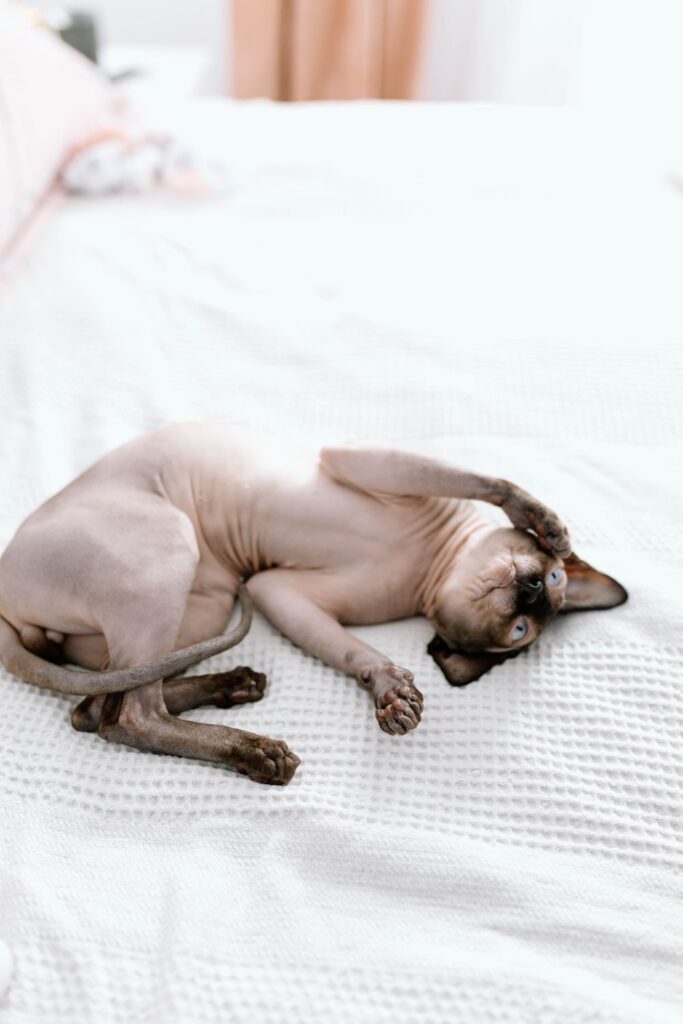
If you are still in the research phase and considering whether this breed is right for you, browsing listings for a sphynx cat for sale alongside reading up on their care needs is a smart approach. Understanding what daily life looks like before committing is always worth the time.
Why Hairless Cats Need More Skin Attention
In a standard cat, the fur does a lot of quiet work. It distributes sebum, the skin’s natural oil, evenly across the coat, keeping the skin beneath healthy while preventing any obvious buildup on the surface. The Sphynx produces the same oils, but there is no coat to absorb or distribute them. Instead, they sit on the skin.
Over time, that buildup becomes visible. You might notice a slightly waxy or brownish residue on your cat’s skin, especially in skin folds around the neck, armpits, and groin. Left unaddressed, this can clog pores and lead to irritation or bacterial issues. It also transfers onto bedding, furniture, and anything else the cat rubs against, which, if you know Sphynx cats at all, is everything.
None of this is alarming once you understand it. It just means that sphynx cat grooming is genuinely part of the routine in a way it is not for most other breeds. While every cat is different, the Sphynx breed is well known for requiring more regular grooming and skin maintenance than coated cats, making consistency an important part of long-term care.
How Often to Bathe a Sphynx
Most experienced owners settle into bathing their Sphynx every one to two weeks. Some cats need it more frequently, some a little less, it depends on how oily their skin is and how warm or active they are.
The bath itself does not need to be elaborate. Warm water, a small amount of gentle cat-safe shampoo, and a thorough rinse are usually enough. The key is to get into every fold and crease, because those are the spots where oil and debris accumulate fastest. A soft washcloth works better than a loofah for sensitive areas.
Drying matters too. Sphynx cats lose body heat quickly, and a wet cat in a cool room gets cold fast. Having a warm towel ready and keeping the bathroom warm during and after the bath make the experience much easier for both of you. Most Sphynx cats, once they have grown up with regular bathing, tolerate it reasonably well. Some even seem to enjoy it, though that varies widely by individual cat.
Ear Cleaning Is Non-Negotiable
This is one that surprises people who have only owned furry cats before. Most cat breeds need their ears cleaned occasionally. Sphynx cats need it every week, sometimes more.
Without hair in the ear canal, dirt, wax, and debris accumulate much faster than they would in a typical cat. A weekly wipe-down with a cotton ball and a gentle ear cleaning solution keeps this under control. You are not cleaning deep into the canal — just the visible part of the inner ear and the entrance. If you notice a strong smell, dark discharge, or your cat scratching at their ears more than usual, that is worth a vet visit rather than just a more aggressive clean.
Nail Care and Skin Folds
Nail trimming tends to come up more frequently with Sphynx cats as well. Again, this connects back to the oil issue; dark residue tends to collect around the nail beds, in the folds of the paws, and between the toes. A weekly trim paired with a gentle wipe of those areas keeps things tidy and prevents any buildup from causing irritation.
The same logic applies to any visible skin folds your individual cat has. Some Sphynx cats have more pronounced folds around the face, neck, and belly than others. Those spots need to be checked and gently cleaned regularly, since moisture and oil can get trapped there.
Sun Sensitivity and Temperature
Two things that often catch new owners off guard: Sphynx cats sunburn, and they get cold.
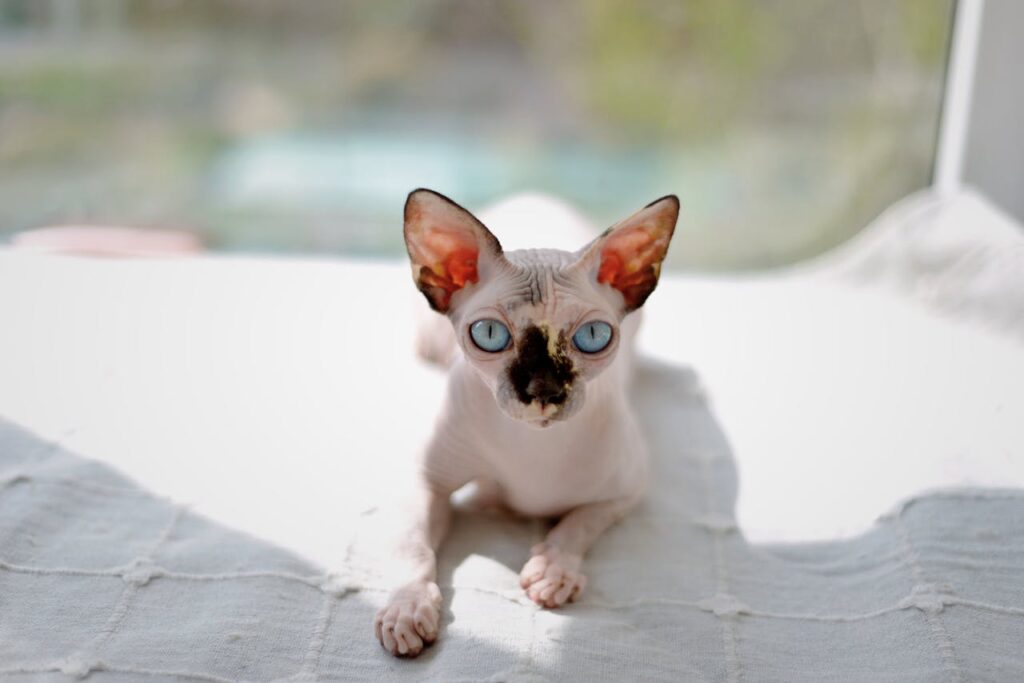
On the sun front, direct sunlight through a window can actually burn their skin after prolonged exposure, just like it can with humans. Keeping sun-drenched spots accessible in moderation is fine, but it is worth being aware if your cat tends to nap in a patch of direct sun for hours.
On the cold side, without fur for insulation, they rely much more heavily on ambient temperature and external warmth. Factors such as skin condition, oil production, and grooming needs can also influence how frequently a Sphynx requires care.
Most Sphynx cats become dedicated blanket burrowers and will happily wear a small cat sweater if introduced to it early. Keeping the house at a consistent, comfortable temperature matters more for this breed than it does for most.
Getting Into a Rhythm
The thing about Sphynx care is that it sounds more demanding in list form than it feels in practice. Once the routine is established, weekly bath, weekly ear clean, weekly nail trim, quick skin check, it becomes second nature. It also tends to deepen the bond with the cat, since so much of the handling is hands-on and physical. Sphynx cats generally lean into that contact rather than away from it.
The investment in time is real, but so is the reward. These cats are genuinely unlike anything else you will share your home with, and getting the care right from the beginning means they stay healthy, comfortable, and happy for the long run.