
This post may contain affiliate links. I only recommend products I use and love. Read the full disclosure here
Updated on: September 10, 2025
Originally published on: September 10, 2025
Flight delays are one of the most frustrating parts of air travel. Whether you are travelling for business, a family holiday, or to see loved ones, a disruption in your schedule can create stress, added expenses, and in some cases, missed opportunities.

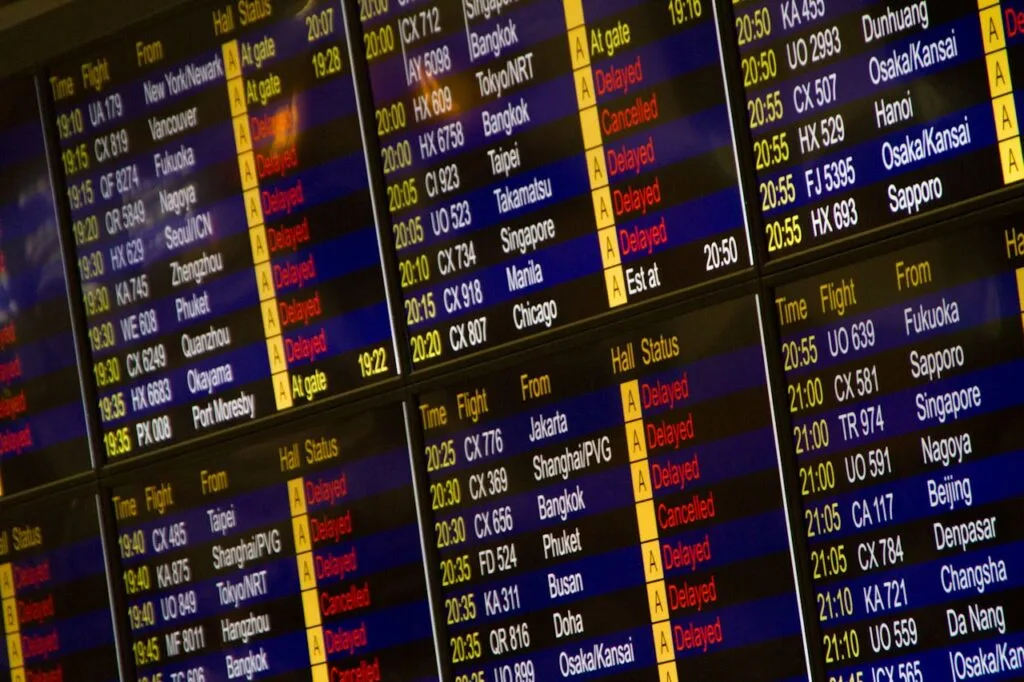
If you’re flying from the United States to Europe, delays can feel even more stressful. The long distances, connecting flights, and international regulations make these disruptions more complicated. That’s why it’s important to know what to do when your flight is delayed; it can make the experience less overwhelming and help you stay in control of your trip.
Stay Calm and Get the Facts
The first step when your flight is delayed is to stay calm and gather accurate information. Airlines are required to provide updates about delays, but the quality and speed of communication can vary. Head to the airline’s app, website, or the departure screens in the airport for the most immediate details.
It is also wise to approach the airline’s service desk directly, although queues can be long in cases of widespread disruption. Ask the airline representative specific questions: How long is the delay expected to last? What is the cause of the delay? Is it due to weather, technical issues, crew scheduling, or something else?
The cause is important because it can influence both the assistance you receive and your eligibility for compensation under EU rules.
Understand Which Rules Apply
When flying from the US to the EU, you might not realise that European regulations can apply to your journey even before you land. Regulation (EC) No 261/2004, commonly called EU261, protects passengers flying into the EU if their flight is operated by a European carrier. That means if you booked with airlines such as Lufthansa, Air France, KLM, Iberia, or any other EU-based airline, you may have rights to care, assistance, and financial compensation if your flight arrives late at its destination.
If your carrier is American, such as Delta, United, or American Airlines, EU261 will only cover you if your flight departs from the EU, not if you are flying towards Europe from the US. In that case, your protections come mostly from the airline’s own policies and US Department of Transportation rules, which are less generous. Still, EU261 becomes highly relevant if your return flight is delayed when leaving the EU.
Check for Immediate Assistance
Even before thinking about financial compensation, you should know that airlines have a duty of care to their passengers. For long delays, especially those stretching into several hours, you may be entitled to meals and refreshments. Airlines will often provide vouchers for airport restaurants, although in practice this can mean long queues and limited choices. If your flight is delayed overnight, the airline should provide hotel accommodation and transport between the airport and the hotel.
Keep all receipts if you decide to purchase your own food, water, or accommodation when the airline fails to provide adequate support. These may be reimbursed later. Always check with the airline before booking something on your own, but do not allow yourself to be stranded without basic necessities.
Protect Your Connections
Long-haul flights from the US to the EU often form part of a larger journey. You may have a connection to another European city, or even further afield to Africa, the Middle East, or Asia. If a delay puts your connection at risk, speak to airline staff as soon as possible. Airlines are responsible for rebooking you on the next available flight if your original itinerary is no longer feasible.
If you booked your flights separately, however, you are not automatically protected. This is a common problem when passengers buy a transatlantic flight on one ticket and then a cheaper regional flight separately. In such cases, the second airline has no obligation to accommodate you, and travel insurance becomes essential.
Keep Documentation
From the moment you learn about your delay, start documenting everything. Take screenshots of airline messages and emails, photograph the departure board showing the delay, and note the exact times of announcements. These details are important if you later pursue compensation or reimbursement. Airlines sometimes dispute claims, so a clear paper trail makes it harder for them to deny responsibility.

Know Your Rights Under EU261
If your EU-bound flight operated by a European carrier arrives at its destination more than three hours late, you may be eligible for compensation of up to €600 per passenger, depending on the length of the journey. The rules exclude extraordinary circumstances such as severe weather or air traffic control strikes, but cover many other causes, including technical faults and staffing issues.
Compensation is owed in addition to the care and assistance mentioned earlier. It is a right, not a goodwill gesture, and applies regardless of the ticket price or whether you booked in economy or business class. Children and infants with paid seats are also covered.
Decide How to Claim Compensation
Filing a compensation claim under EU261 can be done directly through the airline, but this process is often slow and complicated. Airlines may reject claims on questionable grounds, forcing passengers to escalate to national enforcement bodies or even take legal action. Because of this, many travellers choose to use specialised services that handle the claim process on their behalf. Companies such as AirHelp, for example, help passengers claim compensation for delayed flights, charging a fee only if the claim is successful. This can save significant time and effort, especially if you are unfamiliar with the legal details.
Consider Travel Insurance
While EU261 offers strong protections, it does not cover everything. For instance, it does not reimburse missed hotel bookings, prepaid tours, or other non-refundable expenses linked to your trip. Travel insurance can fill these gaps, offering compensation for missed connections, lost luggage, and other financial losses caused by delays. When choosing a policy, pay attention to coverage limits and exclusions, as not all policies treat delays equally.
Stay Productive and Comfortable
Flight delays are not just about lost time; they also test your patience and comfort. Once you know you will be waiting for several hours, think about how best to use that time. Many international airports have lounges that you can access for a fee, offering food, Wi-Fi, and comfortable seating. Some credit cards also provide lounge access as a benefit. Alternatively, use the time to catch up on reading, organise your travel documents, or simply relax and recharge.
If you are travelling with children, make sure to ask about designated play areas or child-friendly facilities in the airport. Keeping young travellers entertained can make the experience much less stressful for everyone.
Learn for the Future
Finally, treat every delayed flight as an opportunity to improve your travel strategies. Consider booking direct flights rather than itineraries with multiple connections, especially when crossing the Atlantic. Build extra time into your schedule if you are attending important events. Explore credit cards or frequent flyer programmes that offer added protections for delays, such as lounge access or automatic travel insurance.
Being proactive does not eliminate the risk of delays, but it helps ensure that you are better prepared next time. Airlines and airports are complex systems, and disruptions will never disappear entirely. Your goal as a passenger is to minimise the inconvenience and secure the compensation or support you are entitled to.

Conclusion
A delayed flight from the US to the EU can derail your plans, but knowing what to do makes a huge difference. Stay informed, ask the right questions, and make use of both airline obligations and your own documentation. Remember that under EU law, passengers may be entitled to financial compensation when delays are caused by the airline and not by extraordinary events. With preparation and awareness, you can turn a stressful situation into a manageable setback rather than a complete disaster.