
This post may contain affiliate links. I only recommend products I use and love. Read the full disclosure here
Updated on: November 24, 2025
Originally published on: November 24, 2025
School uniforms are meant to simplify life, but if you’re a parent, you already know they can become a time-consuming (and expensive) headache, especially if you have to keep changing them every year. Torn knees, faded colors, stretched collars, and mystery stains somehow appear faster than new homework assignments.

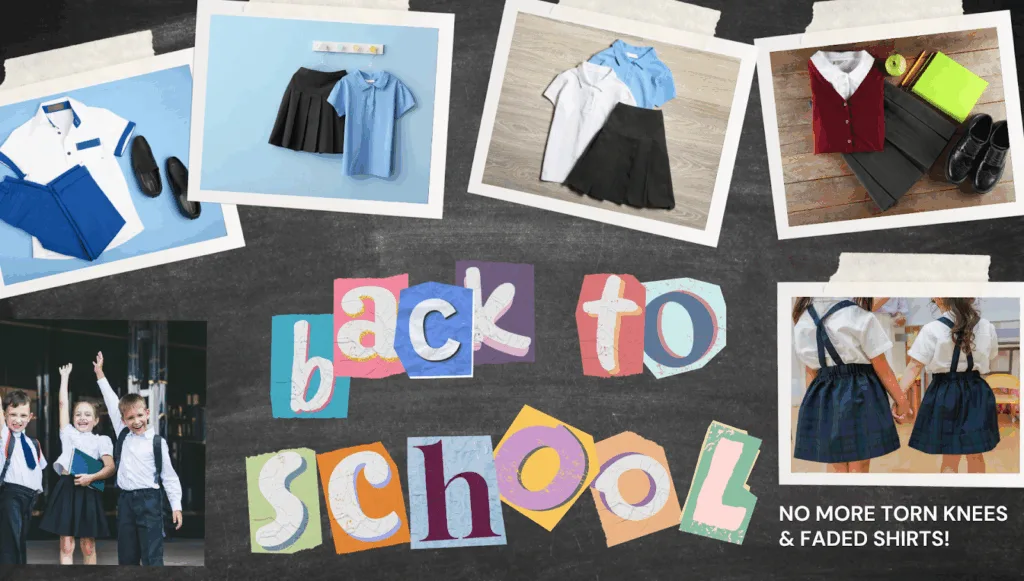
But the good thing is that with a few simple updates to your laundry routine, storage habits, and care techniques, your child’s school uniforms can last the entire school year, while still looking neat, fresh, and comfortable.
Below is your parent-tested uniform care guide.
1. Start with quality basics (even on a budget)
2025-26 trends show more brands are focusing on durability over fast fashion, and that’s good news for parents. Even if you’re on a budget, look for:
- Reinforced knees: Kids spend half their day sitting, running, kneeling, or playing on the ground. Reinforced panels prevent early thinning and tearing.
Double-stitched seams: These are less likely to unravel under constant movement.
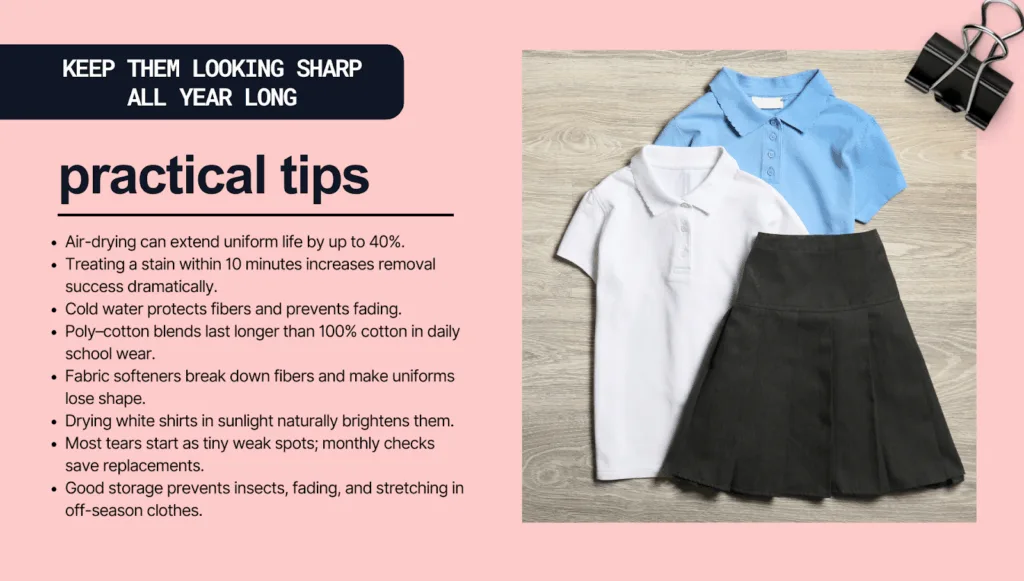
Poly-cotton blends: 100% cotton looks great but fades faster. Blends hold color longer and resist shrinking.
Anti-pilling knits: Sweaters and cardigans often start looking “old” within weeks. Anti-pilling fabric prevents that fuzzy texture.
Another smart way to extend the life of school outfits is to choose pieces that mix and match easily.
For example, French Toast boys’ collared shirts are designed in durable poly-cotton blends that hold their color, resist shrinking, and pair well with different trousers, sweaters, and jackets.
Having a mix and match French Toast boys collared shirts in rotation means less wear on any single piece and more flexibility throughout the school week.
Fabric innovations are improving among school uniform brands, and schools are increasingly recommending blends designed for longer wear. Spending slightly more upfront can mean not having to replace items mid-year.

2. Pre-treat stains before they set (10-minute rule)
Kids are kids. Marker stains, ketchup spills, mud splashes, and the occasional lunchbox disaster are inevitable. If you treat a stain within 10 minutes, the chances of complete removal shoot up dramatically.
Quick tips on removing common stains:
- Food stains: Rinse with cold water, then dab with detergent.
- Ink: Soak the area with rubbing alcohol or hand sanitizer—it breaks down ink molecules.
- Sweat stains: A simple paste of baking soda + water pulls out oils that cause yellowing.
- Mud: Let it dry completely, brush off loose dirt, then wash. Wet mud spreads deeper.
Small enzyme-based stain pens are now widely available and safe for uniforms. Keep one in your child’s bag as they work miracles during school hours.
3. Wash smarter, not harder
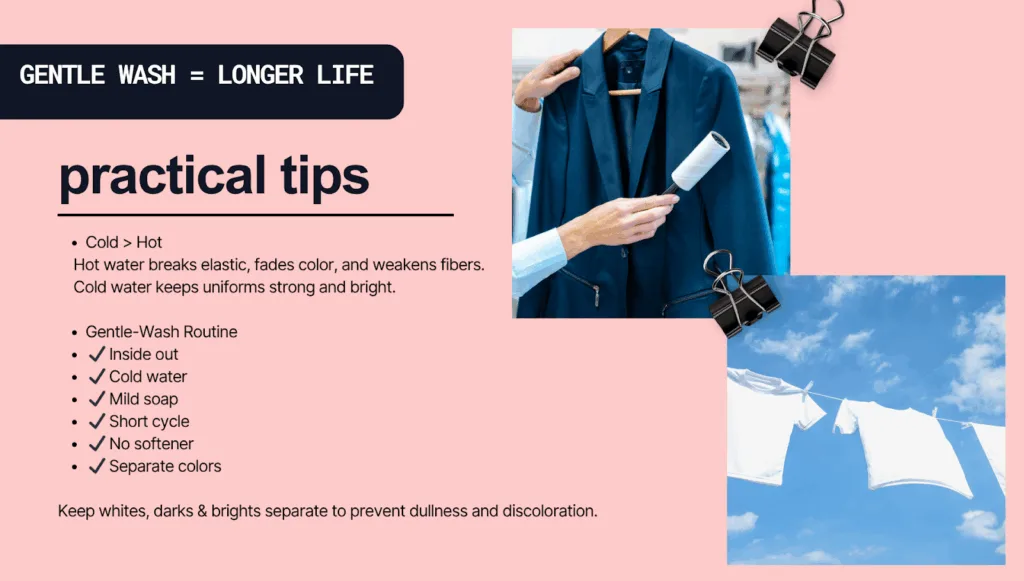
Overwashing ruins uniforms faster than stains do. Long, harsh cycles stretch fabric and wear out seams. Short cycles clean every day dirt without causing stress to the material. Follow this gentle-wash method:
- Turn uniforms inside out to prevent fading.
- Hot water weakens fibers, breaks elastic, and causes fading. Cold water protects color and structure without compromising cleanliness.
- Use a mild detergent (no heavy fragrances as those break down fibers). A small splash of white vinegar in the rinse cycle keeps clothes soft naturally.
- Separate whites, darks, and brights to avoid dullness.
- Softener coats fibers with a waxy layer to create smoothness, but that layer:
– Traps dirt
– Causes shirts to lose shape
– Attracts lint
– Reduces absorbency and breathability
4. Air-dry whenever possible
Dryers shrink and weaken school fabrics. Many families are switching to:
- Foldable indoor drying racks
- Quick-dry mesh hangers
- Sunlight-drying for whites (natural bleaching!)
Air drying extends the life of uniforms by up to 40%.
Extra Trip: Dry white shirts in sunlight. The UV rays act as a natural brightening agent.

5. Teach kids the “after school routine”
A uniform lasts longer when kids learn small habits. A simple 3-step routine works wonders:
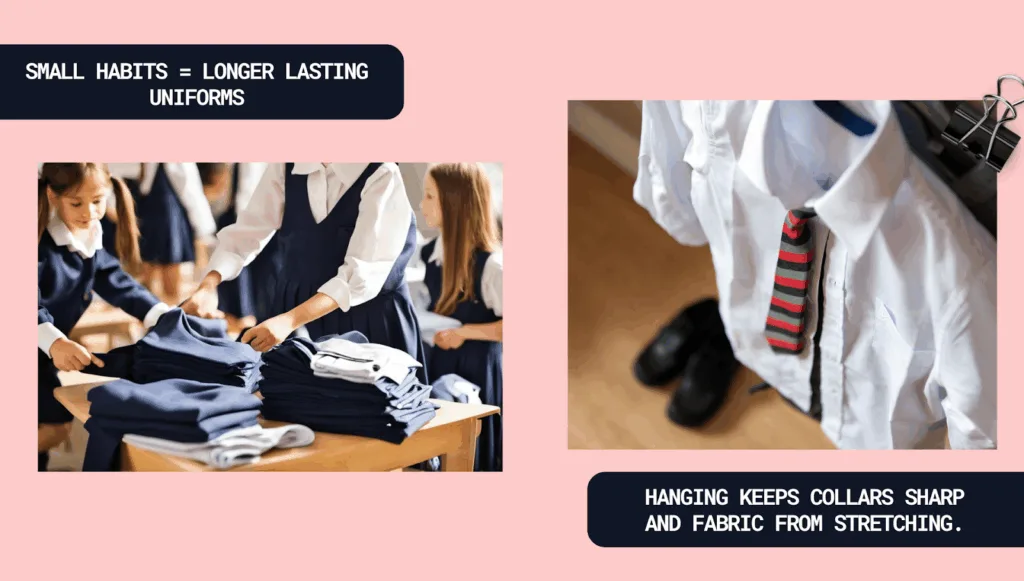
- Hang the uniform properly (don’t toss on a bed or floor).
- Empty pockets because pens can explode more often than we’d like.
- Place dirty items in the laundry basket immediately. Sweat and dirt degrade fibers the longer they sit in a heap.
Teaching kids these habits not only extends uniform life; it builds responsibility and reduces your daily workload.
6. Rotate uniforms (even if you only have two sets)
If you can afford more, great. If not, rotate what you have.
- Assign a “Monday-Wednesday-Friday” set and a “Tuesday-Thursday” set.
- Keep one backup shirt for emergencies.
- Let freshly washed uniforms fully rest to avoid wear.
Rotation reduces fabric stress and stretching.
7. Reinforce weak spots before they tear
Tiny issues turn into big problems fast. Every month, check for:
- Loose threads
- Fraying collars
- Wobbly buttons
- Weak knee areas
- Small holes near pockets
Clothes tear due to repeated stress on one weakened area. Fixing that early prevents a bigger, more visible tear later. Invisible iron-on patches now come in soft, flexible options ideal for school trousers. They add strength without changing appearance.

8. Label everything (It reduces loss and wear)
School lost-and-found boxes are a black hole. Labeling helps avoid frequent rewashes of “found” clothes and prevents losses during sports, field trips, and after-school activities. Use:
- Heat-press labels
- Waterproof name stickers
- Fabric-safe stamps (the favorite: fast, easy, and long-lasting)
When clothes return home daily (and not lost for weeks), they avoid mildew, dust, and rushed rewashing, which contributes heavily to wear.
9. Store out-of-season uniforms properly
Proper storage makes next season’s uniform feel “new again.” If your child has winter blazers or sweaters:
- Use breathable cloth garment bags (never plastic)
- Add cedar blocks or lavender sachets to deter insects
- Store in a cool, dry place away from sunlight
- Fold knits carefully to avoid stretching
This keeps the uniform ready for the next school year or younger siblings.
10. Refresh, don’t replace
Before buying new pieces, “revive” the old ones. Most uniform items degrade in appearance long before they degrade in function.
- Fabric shavers remove pilling and instantly make sweaters look new.
- White vinegar in the rinse cycle revives dull shirts.
- Re-dyeing black or navy trousers takes 20 minutes and saves $$$
- Light ironing or steaming sharpens collars and hems.
- Button replacement is an easy fix that instantly improves appearance.
Tiny upgrades often add 3 to 6 more months of life to each item.


Final thoughts
A school uniform may be worn for 6 to 10 hours a day, five days a week as it’s no surprise they show wear quickly. But with a few simple habits, some smarter washing choices, and a focus on fabric-friendly routines, you can make uniforms last the entire school year without constant replacements and get your child ready for back to school routine.
A little care today means less spending tomorrow, and a child who feels confident and comfortable every day.