
This post may contain affiliate links. I only recommend products I use and love. Read the full disclosure here
In a world where instant gratification, screens, and a fast-paced lifestyle are the norm, there is something almost mystical about creating an object with your own hands. Model ship building lets you spend several evenings sitting in front of a workbench, transforming strips of wood, brass fittings, and tiny rigging lines into a masterpiece.
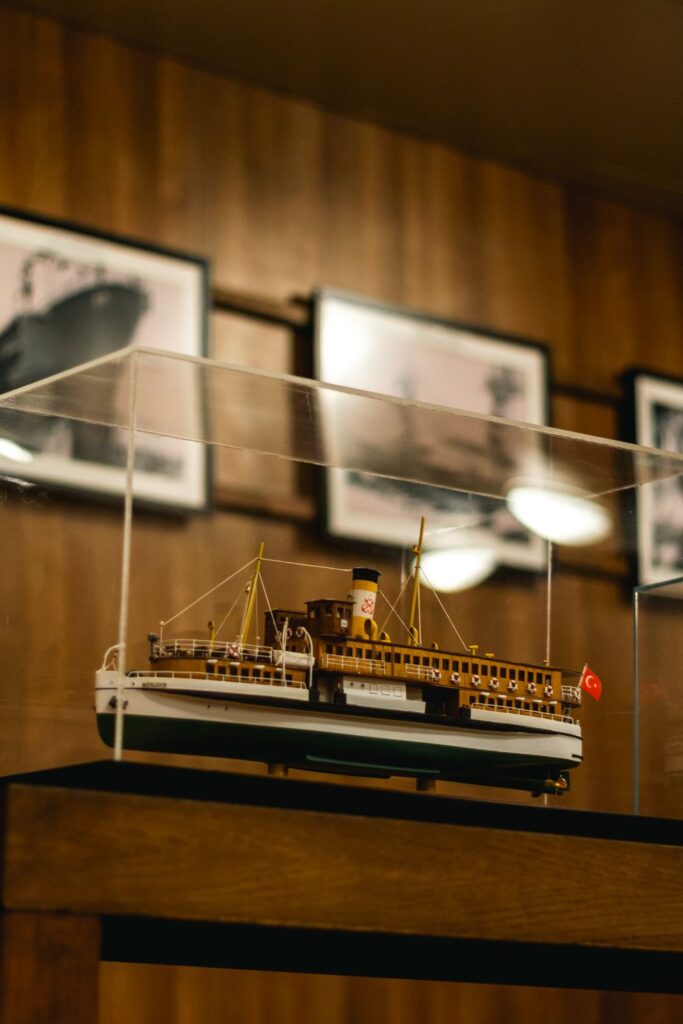
The fact is that building a wooden model ship at home can be the ultimate expression of a healthy escape. It is a real opportunity to disconnect from the daily routine, exercise patience, and immerse yourself in history.
So, if you want to start doing something different, why not try assembling model boat kits? However, it cannot be just any kit; it should be one that includes top-quality materials and a detailed guide that makes assembly easier, as these are the types of kits that spare you the frustration of dealing with poorly cut parts and confusing instructions.
What Does the Practice of Naval Modeling Bring to Your Life?
Beyond the beautiful ship that will decorate your home or office, this artisan activity can bring enormous benefits to your mental and emotional well-being:
- “Zen” effect and active meditation: Focusing your attention on the exact fit of a bulkhead or the tracing of a line can act as an authentic relaxing balm, as the mind concentrates on the present and disconnects from everyday stress.
- Development of patience and concentration: In a society where everything is immediate, modeling teaches the value of perseverance and step-by-step work.
- Improvement of fine motor skills: Handling precision tools, delicate sanding, and knotting the rigging exercise manual dexterity and visual-motor coordination.
- Living connection with history: Every ship tells a story. By building it, you understand how our ancestors navigated, how they overcame the challenges presented to them, and how naval engineering evolved over the centuries. In fact, ship models have been used for centuries, with surviving examples providing a detailed record of changing ship designs and construction.
- Pride of creation: Few experiences compare to the personal satisfaction of contemplating a finished masterpiece and being able to say with pride, “I built it myself, piece by piece.”
Professional Modeling Kits: What Are They and What Are Their Main Characteristics?
To build one of these beautiful ships at home, you are going to need a professional modeling kit, an artisan set of pieces designed especially to provide a precise and rewarding assembly experience. Unlike low-quality models that require constant corrections, these are known for offering:
- High-precision laser cutting: Structural parts made of fine woods such as walnut, linden, or sapele are cut with laser technology to guarantee a perfect fit between bulkheads and keel.
- Cast metal and brass details: Cannons, anchors, winches, figureheads, and blocks are not made of coarse plastic but of refined metals that provide extraordinary realism.
- Visual guides and multimedia support: Most include step-by-step manuals with full-color photographs. What’s more, some even feature video tutorials that make rigging and planking ships much simpler and more accessible for everyone.
Classification of Naval Modeling Kits According to Their Difficulty Level
To enjoy the assembly process, it is essential to choose a vessel that aligns with your current skills. For this, it is useful to know that kits are classified mainly into three levels:
- Initiation Level (Beginner): Designed for those who have never worked with wood. They have simple, single-planked hulls, few deck elements, and fairly simple masting.
- Intermediate Level: Intended for those who already know how to use basic tools. They introduce techniques like double hull planking, elaborate deck structures, and more complex sail systems.
- Advanced or Expert Level: A true artisan challenge. We are talking about large-scale models with hundreds of cannons, intricate networks of rigging, and a multitude of ornamental details that demand maximum precision and a lot of patience.
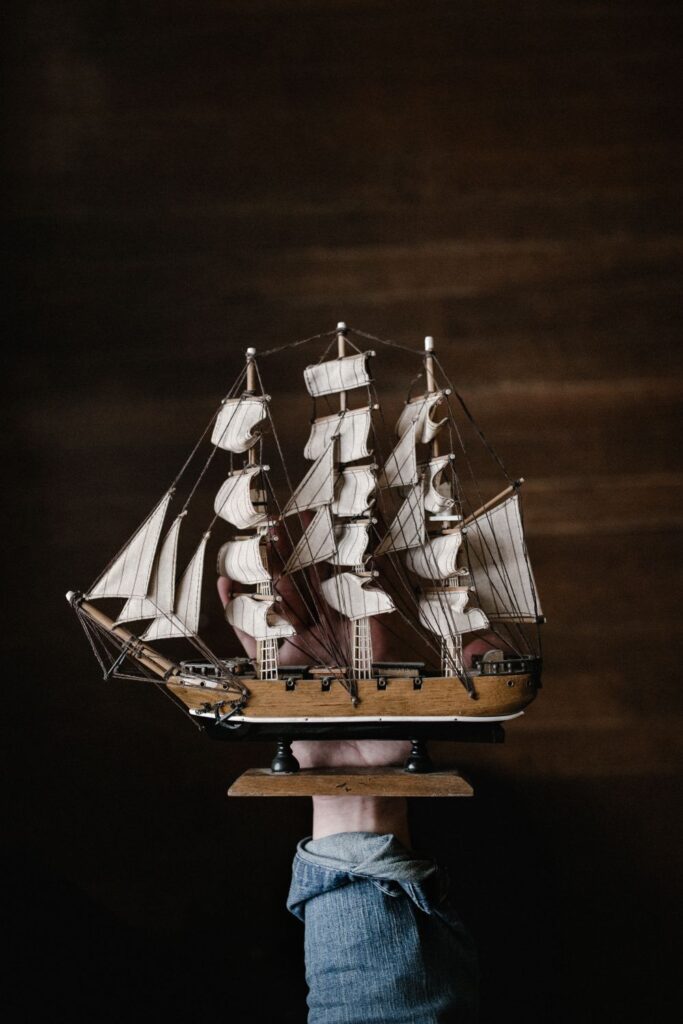
Types and Models of Ships You Can Build
Best of all, the variety of vessels available on the market is as vast as the oceans themselves. In fact, depending on your historical or aesthetic preferences, you can choose between:
- Galleons and ships of the line: The imposing floating fortresses of the 16th to 18th centuries.
- Pirate and privateer ships: Vessels shrouded in legend and adventure, like the legendary Royal Fortune of Captain Bartholomew Roberts, the mystical Black Swan, or the agile Buccaneer.
- Exploration vessels and historic milestones: Replicas of ships that changed the course of the world, like Sir Ernest Shackleton’s indestructible Endurance, the emblematic Gjøa used by Roald Amundsen for the Northwest Passage, or the historic caravels and carracks of the Age of Discovery.
- Frigates and schooners: Streamlined vessels of great speed and elegant lines, ideal for mastering the art of rigging, like the classic American schooner Albatros.
- Smaller boats and Viking ships: From the legendary Nordic drakkars to small auxiliary fishing or rescue boats, these are perfect for understanding the primary structure of rib-building carpentry.
The tradition of creating detailed ship models also spans many different types of vessels, from sailing ships and schooners to steamships, reflecting the enormous variety of designs found throughout maritime history.
Professional Tips for Building Your First (or Next) Model Ship at Home
- Prepare your workspace: Gather the basic tools every modeler needs: a good lamp, a cutting mat, precision tweezers, fast-setting wood glue, and small clamping pins or vises to secure the planks.
- Patience over speed: Remember that naval modeling is a marathon, not a sprint. So, take it easy and go one bulkhead at a time, respecting the glue’s drying times and enjoying every stage of the process.
- Finishing touches: Perform smooth and progressive sanding of the parts before varnishing them, apply matte or satin varnishes to protect the wood, and maintain uniform tension in the rigging so that the final piece looks like it was built by a true professional.
As you can see, building a ship at home is much more than assembling pieces. It is reliving history with your hands and treating yourself to invaluable quiet time. So, what are you waiting for to start?