
This post may contain affiliate links. I only recommend products I use and love. Read the full disclosure here
Updated on: August 7, 2026
Originally published on: August 7, 2026
Living in a room that feels tight and crowded can be exhausting. You move a chair, shift the coffee table, but somehow the space still feels boxed in. Choosing the right small living room furniture can make a surprising difference, helping the room feel more open without changing its size.
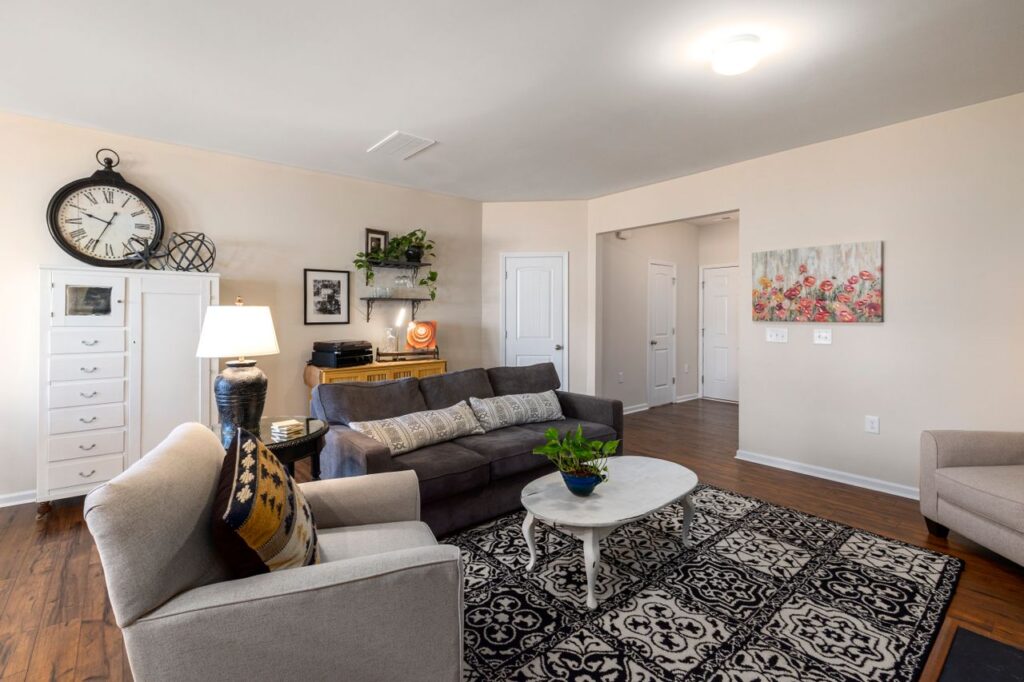
Most of the time, the problem is not your room’s size but what you put inside it. The look and feel of your room depends greatly on scale, mass, and arrangement.
The look and feel of your room depends greatly on scale, mass, and arrangement. When selecting modern living room furniture, choose pieces with low profiles, clean lines, and lifted bases to make your space feel larger without knocking down a single wall.
If your layout feels snug for all the wrong reasons, here are 9 clear signs your setup is shrinking your space and simple ways to fix it.
1. Your Sofa Sits Flat on the Floor
Take a quick look at your couch. Does it sit directly on the carpet with heavy fabric running all the way down to the floor. When furniture sits flush against the ground, it acts like a solid wall. It prevents the entry of light into the room and obstructs your vision from seeing the floor below. This is called visual weight in interior design. A room that has too much visual weight becomes heavy.
The Fix: Look for seating raised on slender legs. When you can see the floor stretching underneath a couch or accent chair, your brain registers more open floor space. Even four or five inches of clearance under a sofa lets light bounce around and instantly lightens the room.
2. You Have to Turn Sideways to Walk Through
A cozy space should allow you to move from the entrance to the sofa or the balcony without difficulty. In case you feel that you have to avoid coffee table angles or maneuver through armchairs, then your furniture is controlling the traffic flow in your home.
As per standard interior design guidelines, main walkways should be at least 30 to 36 inches wide. Maintaining proper furniture clearances improves both comfort and traffic flow throughout the room.
The Fix: Trace your walking routes. Should you find a large end table or an overly big chair getting in your way, shift it to another place or replace it with something else. Instead of having a rectangular-shaped table, opt for an oval-shaped one.
3. The Scale Is Out of Proportion
Everyone can relate to this: a huge five-piece sectional that has been crammed into an apartment-sized living room. Even though it is comfy when watching movies, it occupies up to 80% of the room’s space. On the flip side, fill a small room with ten tiny, mismatched pieces, and it looks like a cluttered furniture store.
Scale is all about how big a piece looks compared to the room it lives in.
The Fix: Measure before you buy! Leave at least two to three feet of open floor space around your main seating area. If you love big sectionals, opt for a modular L-shape with a low back rather than a deep, bulky U-shape that cuts off the middle of the house.
4. Your Furniture Blocks Natural Light
Natural sunshine is the ultimate space-expander. Bright rooms feel open, while dark corners feel small and cramped.
If you have a high-backed armchair, a tall bookshelf, or thick curtains placed right next to a window frame, you are accidentally cutting off your best source of light. Even a partial shadow cast by a high sofa back can make a small room feel boxed in. Maximizing natural daylight can make interior spaces feel brighter and more open.
The Fix: Ensure that windows are totally unobstructed. Position low pieces, such as a low bench or small side table, near the window sills. For storage close to the window, use an open-backed shelf system allowing light to stream through unhindered.
5. Everything Is Pushed Flat Against the Walls
It sounds counterintuitive, doesn’t it? Most people think pushing every single couch, chair, and cabinet flat against the wall creates maximum floor space in the center.
In reality, doing this creates a waiting room effect. It highlights the exact boundaries of your walls, making the room feel like a rigid box. It also leaves an awkward, empty circle in the middle that feels cold rather than inviting.
The Fix: Leave some breathing space for your items. Place your couch about two or three inches away from the wall. Should your room be bigger, then move your main seating area towards the middle of the room, using an area rug to ground the space. The slight gap between the couch and the wall will give the impression that the walls are farther away.
6. High Sofa Backs Block Your Sightlines
Standing in the entrance of your living room, you should be able to take in the whole room easily by glancing to the other side of the room. High-backed armchairs, high recliners, or low sofas with thick cushioning serve as visual obstacles.
Every time your sightline hits a tall backrest, the room feels shorter than it actually is.
The Fix: Go for low-profile seating. Low-back sofas ensure that there are clear lines of sight from one end of the room to another. This helps maintain the flow of the room visually.
7. You Have Too Many Small, Scattered Pieces
It is quite easy to gather smaller pieces of furniture: two plant stands, three nesting tables, one ottoman, one magazine rack, and a couple of chairs. Although each of these items may not seem very big by itself, together they visually divide the floor into many small pieces.
Visual clutter tricks your brain into thinking the room is messy and crowded, even when everything is clean.
The Fix: Consolidate! Swap three small, clutter-prone side tables for one well-proportioned coffee table with built-in storage. Replacing multiple small items with one clean, anchor piece makes the entire floor plan look calmer and roomier.
8. Dark, Heavy Upholstery Absorbs All the Light
Dark tones, such as charcoal, dark brown, or navy blue, do not reflect but absorb light. Whereas a dark-colored velvet sofa could be very comfortable in a spacious den, it may appear as a dark hole that absorbs all the energy of the small living room.
Pairing dark upholstery with heavy, solid wooden tables makes the room feel visually dense.
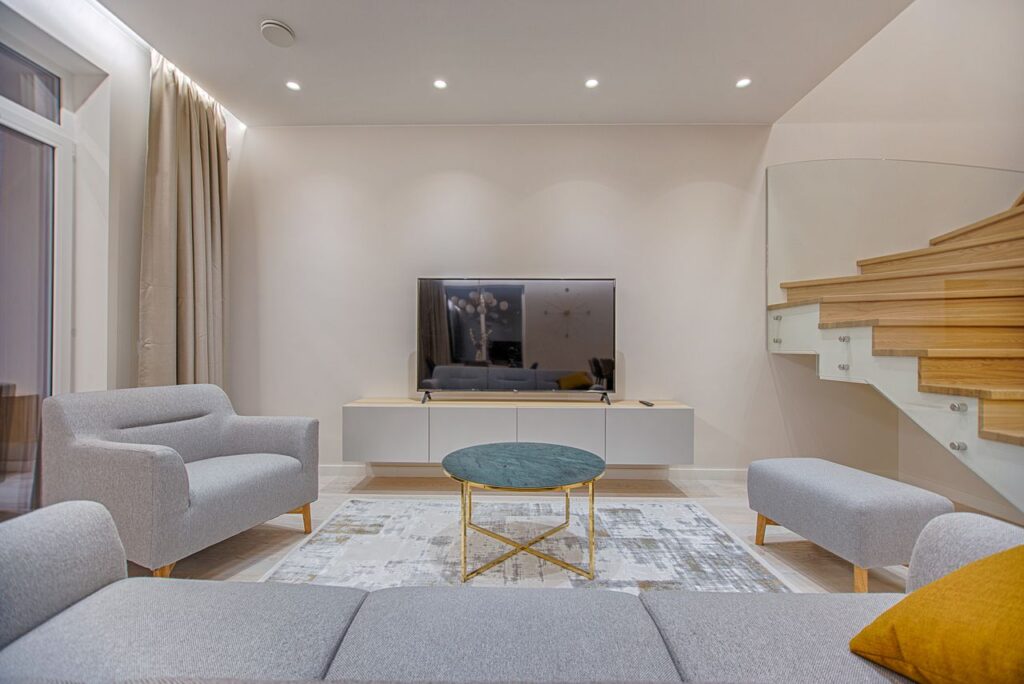
The Fix: Choose to go for lighter colors when choosing larger pieces of furniture. Cream, light gray, beige, or light oatmeal can be great choices. In case you have an affection for dark colors, incorporate them using smaller items, such as decorative cushions, paintings, or rugs. You could also choose glass, acrylic, or light oak tables to keep the center of the room looking airy.
9. Your Coffee Table Is a Solid Wooden Box
Coffee tables sit right in the center of the living room, making them the visual focal point. A solid, boxy wooden coffee table with closed sides acts like a big boulder sitting on your rug. It blocks light and fills up valuable visual real estate.
The Fix: Consider changing your coffee table for one with exposed legs, glass or marble tops, or an oval shape. The transparency of glass or acrylic tops almost makes them disappear, giving you a clear view right down to your rug below. Oval and round tables eliminate any sharp angles, making it easier to walk around them safely.
Conclusion
Making a living room feel spacious isn’t about tossing out everything you own or buying a bigger home. It comes down to smart choices in scale, height, and light.
So, if you notice the signs mentioned here, get to work!