
This post may contain affiliate links. I only recommend products I use and love. Read the full disclosure here
Updated on: October 1, 2026
Originally published on: October 1, 2026
Most pond owners judge healthy pond water by looking at it. If you can see the bottom, everything must be fine. If it turns green or cloudy, something is wrong.
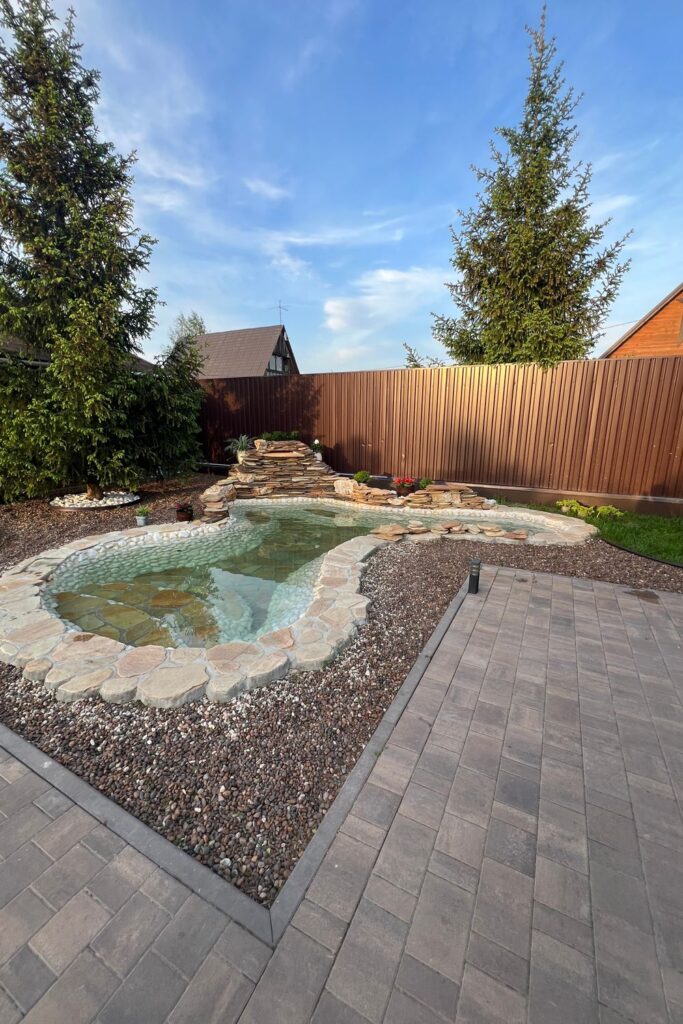
That instinct feels logical, but it misses something important. Clear water is not necessarily clean water, and some of the most dangerous conditions in a pond produce no cloudiness at all.
A pond can look picture perfect while ammonia builds toward harmful levels underneath. Another pond might look slightly tinted and be completely healthy.
Understanding this gap is what separates owners who constantly fight problems from those whose ponds mostly run themselves.
Why Clarity Alone Tells You Almost Nothing
Water clarity measures one thing: how many particles are floating in the water. That is useful information, but it says nothing about what is dissolved in the water, which is where the real dangers live.
Interestingly, extremely clear water can even signal a problem.
Water that is unusually clear often points to inadequate nutrient levels in the pond, or nutrients being tied up in excessive submerged vegetation. A pond with almost no biological activity looks pristine, but it also lacks the living systems that keep conditions stable when something changes.
There is another issue people rarely think about. Harmful bacteria such as Aeromonas and Pseudomonas thrive in still, low oxygen water. In a pond that looks clear but has little competition from beneficial bacteria, these pathogens can actually establish more easily, leading to fin rot and ulcers in fish that otherwise seem to live in beautiful conditions.
What Healthy Water Actually Looks Like Underneath
A healthy pond is defined by stability, not appearance, which is why water quality measurements are so important for understanding what is actually happening below the surface.
A few things matter more than the rest.
Ammonia
This is the most urgent one to watch. Even at low concentrations around 0.25 ppm, ammonia causes gill damage and stress. At 2 ppm, it can become lethal within hours depending on pH and temperature. In an established pond, this should read zero.
pH
Most backyard ponds do well somewhere in the 7.2 to 7.8 range. What matters more than the exact number is stability. Sudden swings stress fish far more than a reading that stays consistently a little off.
Dissolved Oxygen
Dissolved oxygen is an important measure of water quality because aquatic animals rely on it to survive. This one supports everything else. Fish need it to breathe, and the beneficial bacteria in your filter need it to process waste. Without enough oxygen, even good filtration starts to underperform.
Alkalinity
Alkalinity acts as a buffer that keeps pH from swinging. A pond with low alkalinity can crash unexpectedly, even when every other reading looks fine.
The Most Dangerous Thing About Water Problems
Pond issues do not develop gradually in the way most people assume. Ammonia can reach lethal levels within 24 to 48 hours in an overstocked pond, and by the time fish start behaving oddly, the window for easy intervention may already be closing.
This is exactly why visual inspection fails as a monitoring method. You are essentially waiting for symptoms rather than catching the cause.
The honest reality is that most owners never test their water at all. Problems get discovered only after something visible goes wrong, which is almost always later than ideal.
A basic test kit costs very little and takes a few minutes. Testing ammonia and pH every week or two during warm months gives you real information instead of guesses.
How Filtration Actually Protects Water Quality
Removing debris is only part of what filtration does. The more important job happens biologically, where bacteria convert toxic ammonia into safer compounds.
A proper pond filter system handles both. Mechanical media traps physical waste before it decomposes and releases ammonia, while biological media gives bacteria the surface area they need to colonize and work.
This is why cheap filters often disappoint. Without proper separation between mechanical and biological stages, debris clogs everything at once, and bacteria lose the stable environment they depend on.
A pond filter system handles both. Mechanical media traps physical waste before it decomposes and releases ammonia, while biological media gives bacteria the surface area they need to colonize and work.
Why Movement Matters More Than It Looks
Circulation is not decorative. Oxygen enters water primarily at the surface, and moving water dramatically increases how much gets absorbed.
Aeration helps keep pond water mixed so layering is minimized and surface water stays well oxygenated, which matters most during hot weather when warm water holds significantly less oxygen than cool water.
A solar water fountain pump handles this continuously without electrical costs. As water sprays and falls back into the pond, it pulls oxygen in at the surface, which supports both fish and the bacteria living in your filter.
A solar water fountain pump also removes the need for outdoor wiring, which makes placement far more flexible and setup considerably simpler than conventional alternatives.
Nutrients Are the Root of Most Problems
Almost every recurring pond issue traces back to nutrient load. Excessive nutrients lead to an overabundance of aquatic weeds and algae, which then cause oxygen depletion when they die and decompose.
This creates a cycle. Algae grows from excess nutrients, then dies, then consumes oxygen as it breaks down, which stresses fish and weakens the bacteria that would have processed the waste.
Breaking that cycle happens at the source. Feed less, remove debris before it decomposes, and give plants enough presence to compete with algae for the same nutrients.
Treating the algae itself only addresses the symptom. The nutrients that caused it remain, which is why the problem keeps returning for so many owners.
Reading Your Pond Correctly
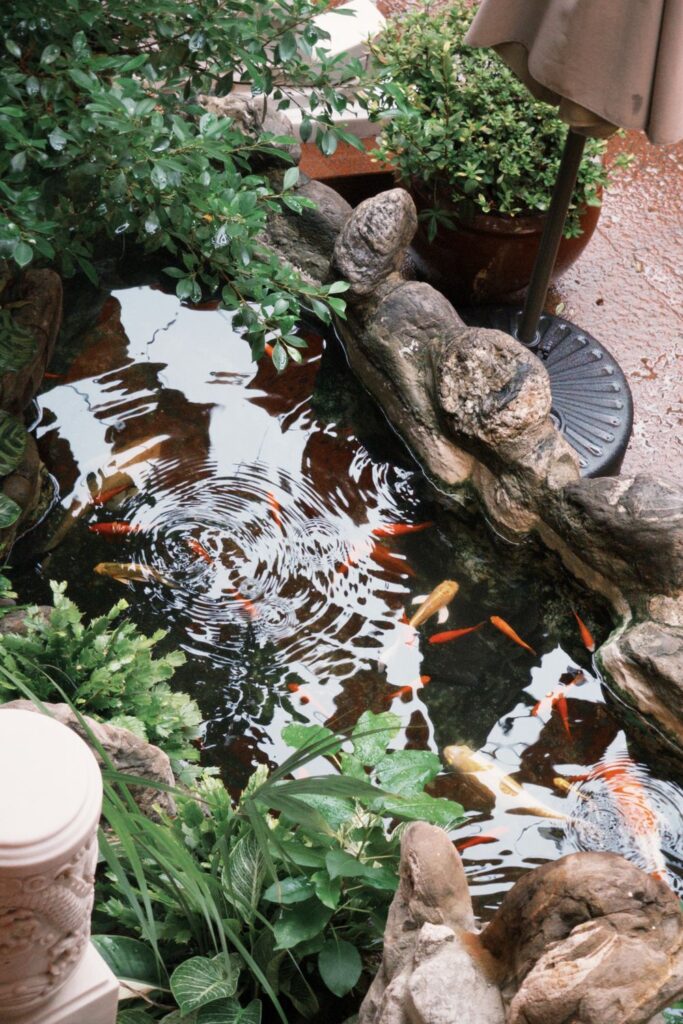
Once you stop judging by clarity alone, better signals become obvious.Fish that eat eagerly and swim actively tell you more than clear water does. Fish hanging near the surface gasping, even in water you can see through, signals low oxygen.
Plants growing vigorously indicate nutrients are being consumed productively. Stagnant plant growth alongside heavy algae suggests algae is winning that competition.
A faint tint is often completely normal, especially in ponds with active biological systems. Sudden changes matter far more than any particular appearance.
Final Thoughts
Clear water and healthy water overlap often, but they are not the same thing. Clarity describes what floats. Health describes what dissolves, how stable conditions stay, and whether the living systems in your pond can handle change.
Test occasionally instead of relying only on your eyes. Support your filtration with real circulation. Control nutrients at the source rather than chasing algae after it appears.
Do those three things, and clear water tends to follow naturally as a side effect of health, which is a far more reliable outcome than chasing clarity on its own.