
This post may contain affiliate links. I only recommend products I use and love. Read the full disclosure here
Updated on: September 9, 2026
Originally published on: September 9, 2026
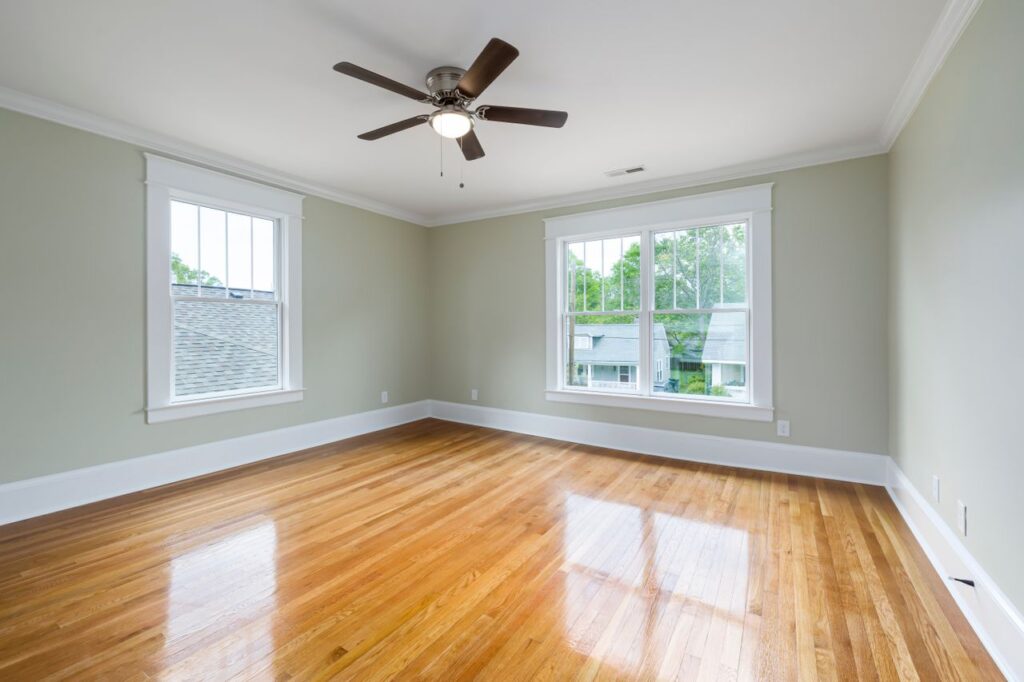
A hardwood floor isn’t really a finished object. The relationship between humidity and hardwood floors continues long after somebody nails the last board into place, with the wood quietly reacting to changes in the air year after year.
That can be a strange thing to accept about something people walk across every day. But wood never stops exchanging moisture with the air around it, and in a humid climate, the air has plenty of opinions.
Here’s what actually happens to a hardwood floor over the course of a year, season by season.
First, the Thing Nobody Explains at the Store
Wood is hygroscopic. It absorbs moisture from humid air and releases it when the surrounding air becomes drier, continuously adjusting to the conditions around it.
That balance point has a name. Equilibrium moisture content is the moisture level wood settles at for a given combination of temperature and humidity, and it changes whenever those conditions change.
When wood absorbs moisture, it swells. When it loses moisture, it shrinks. Neither is a defect. It is simply what wood does.
The trouble starts when those changes become too large. Hardwood flooring performs best when indoor conditions remain reasonably consistent rather than swinging between very humid and very dry.
Keeping indoor humidity below 60 percent, and ideally between 30 and 50 percent, can help control excess moisture and the problems that come with it.
In a humid subtropical climate, however, maintaining that consistency can become much harder once summer arrives.
Summer and Why the HVAC Question Comes First
Humid subtropical regions can mean months of warm, moisture-heavy air, with outdoor humidity climbing well beyond comfortable indoor levels.
Every time a door opens, some of that air makes its way inside, and the floor responds to the changing conditions.
As boards absorb moisture and swell, they begin pressing against each other. If that movement becomes excessive, the result can be cupping, where the edges of individual boards rise higher than their centers. More serious moisture problems can eventually contribute to buckling, where sections of flooring pull away from the subfloor.
This is why a knowledgeable installer may want to know about the home’s air conditioning and indoor conditions before getting too far into color and finish choices. A flooring company Atlanta homeowners bring in, such as the local team at 50Floor, will typically treat the in-home assessment as the actual starting point, and that order makes much more sense once the underlying science is clear.
Air conditioning isn’t purely comfort equipment in this situation. Cooling systems can also remove moisture from indoor air, helping keep conditions more consistent during humid summer months.
Fall, the Sneaky Season
Fall can feel like relief after a long, humid summer. For hardwood floors, though, it’s also when some of the effects of those summer conditions may become more noticeable.
As indoor air becomes drier, flooring that absorbed moisture during the summer begins releasing it and shrinking again.
If the boards experienced significant swelling and pressure during the humid months, some changes may remain even after conditions return to normal. Gaps can become more noticeable as the flooring dries, and seasonal movement that went unnoticed during summer can suddenly become much easier to see.
Winter Brings the Opposite Problem
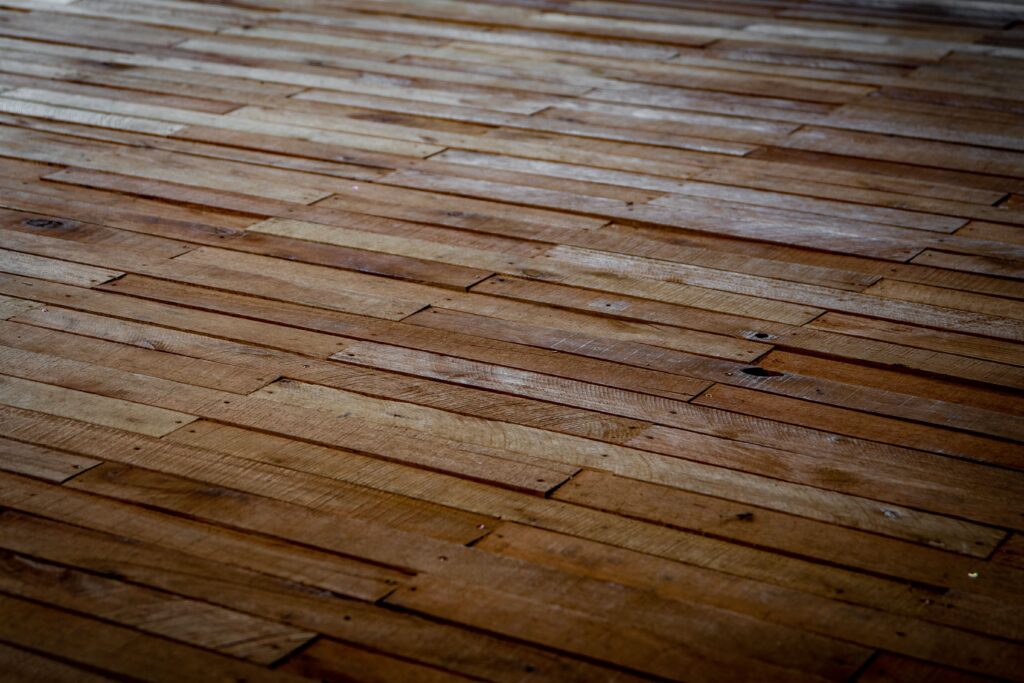
Then the heat comes on, and indoor air gets genuinely dry.
Now the floor is doing the opposite of what it did during the humid summer months. Instead of absorbing moisture and swelling, the wood begins releasing moisture and shrinking. Small gaps may open between boards, and the floor may become a little noisier underfoot.
Thin gaps that appear during winter and close again when humidity rises are generally normal seasonal movement rather than damage. Wood floors naturally expand and contract as indoor conditions change throughout the year.
The movement of a single board may be tiny, but multiply it across an entire room and it adds up. That’s why hardwood floors need enough expansion space around the perimeter to accommodate those seasonal changes without putting excessive pressure on the floor or surrounding walls.
The goal isn’t to stop a hardwood floor from moving. That’s impossible. The goal is to keep indoor conditions reasonably consistent so the amount of movement stays small enough that the floor can handle it.
Spring, Where It Starts Over
Spring is often short and wet in humid climates, and before long, the entire cycle begins again.
The floors that handle these seasonal changes best aren’t necessarily the most expensive ones. They’re the ones in homes where indoor humidity stays reasonably consistent throughout the year.
Which leads to the genuinely useful part.
What Actually Helps
Start with a hygrometer. They’re inexpensive, easy to find, and turn indoor humidity from guesswork into an actual number. One in the main living area, checked occasionally, is usually enough to tell you whether conditions are staying reasonably consistent.
Run the air conditioning during humid summer weather, even on days that aren’t particularly hot. Cooling the house is only part of the job. Removing moisture from indoor air can also help keep conditions more stable for hardwood flooring.
If the house consistently runs too humid, a whole-house dehumidifier may be worth considering. It’s an investment, but so is replacing a damaged hardwood floor.
Winter can require the opposite approach. If indoor humidity drops too low once the heat is running regularly, adding humidity can help limit excessive drying and shrinking.
Wipe up spills quickly, too, and be honest about how long the dog’s water bowl has been sitting in exactly the same spot. Seasonal humidity isn’t the only source of moisture a hardwood floor has to deal with.
And when new floors are being installed, ask about acclimation. Wood flooring needs to adjust to the conditions where it will actually be installed and used. Proper acclimation is about getting the flooring and its environment into balance before installation, rather than simply leaving boxes sitting in the house for an arbitrary number of days.
What Is Not Worth Worrying About
Not every gap is a crisis, and nobody needs to start inspecting the floorboards with a magnifying glass.
Thin seasonal gaps that appear during dry winter months and close again when humidity rises are considered normal for wood flooring. Slight moisture-related changes that disappear once indoor conditions return to normal aren’t necessarily signs that something is wrong.
What deserves more attention is movement that doesn’t reverse when conditions change. Persistent cupping, boards that begin lifting, soft or springy areas, or unusually large gaps are all good reasons to have the floor evaluated.
The Bottom Line
Humidity isn’t going anywhere, and in warm, wet regions, hardwood floors will continue responding to seasonal changes year after year.
The floor is going to move. That part isn’t optional.
What homeowners can control is the size of the swing. Keeping indoor humidity within a reasonably consistent range throughout the year helps limit how much wood expands and contracts.
Let those conditions swing too far in either direction, and eventually the floor may make the problem impossible to ignore.